.svg)

The method travelled. It was never the same twice.
Korean Natural Farming was developed in one country, scaled in another, and is being tested now in a third. At each step, what stayed the same was the thinking. What changed was nearly everything else.
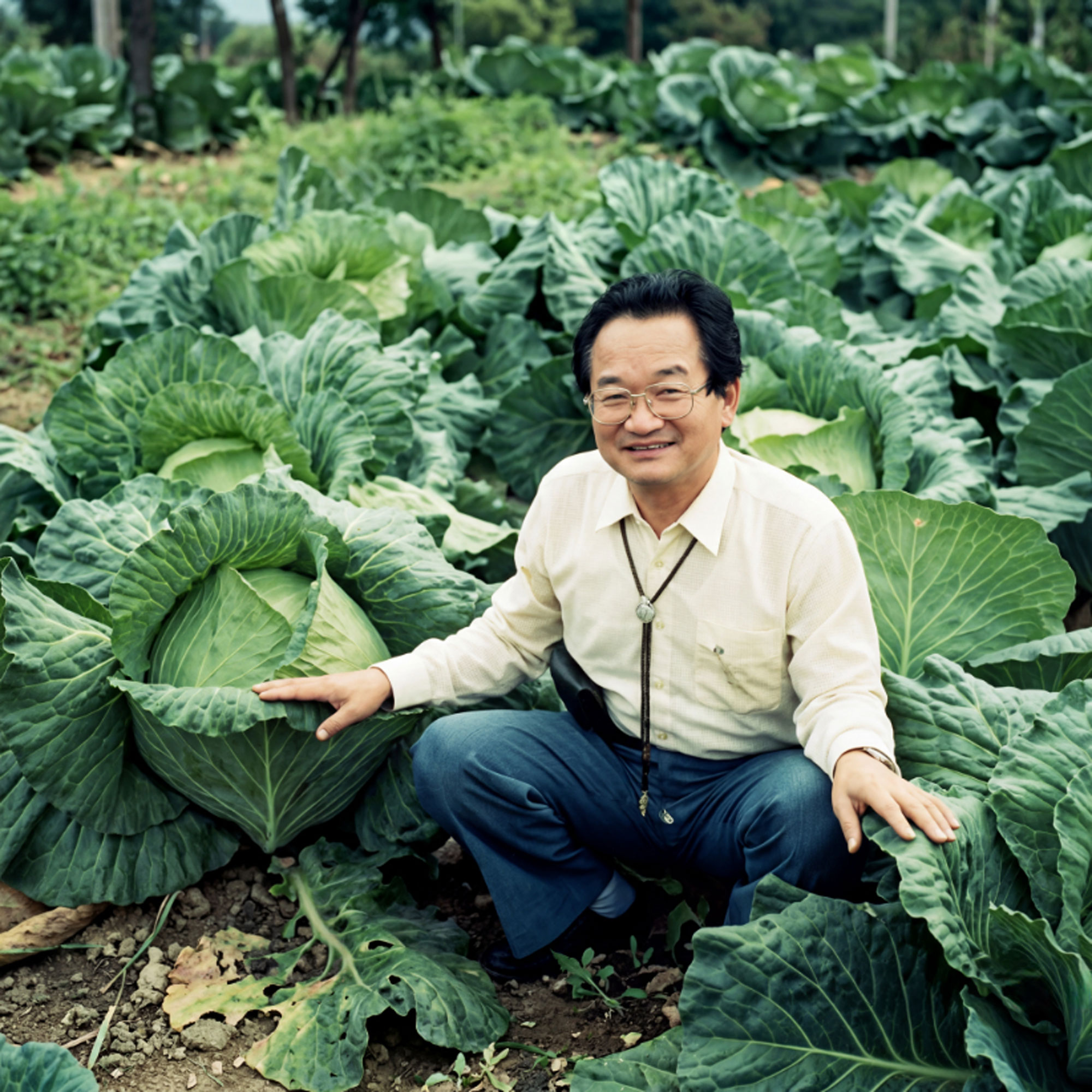
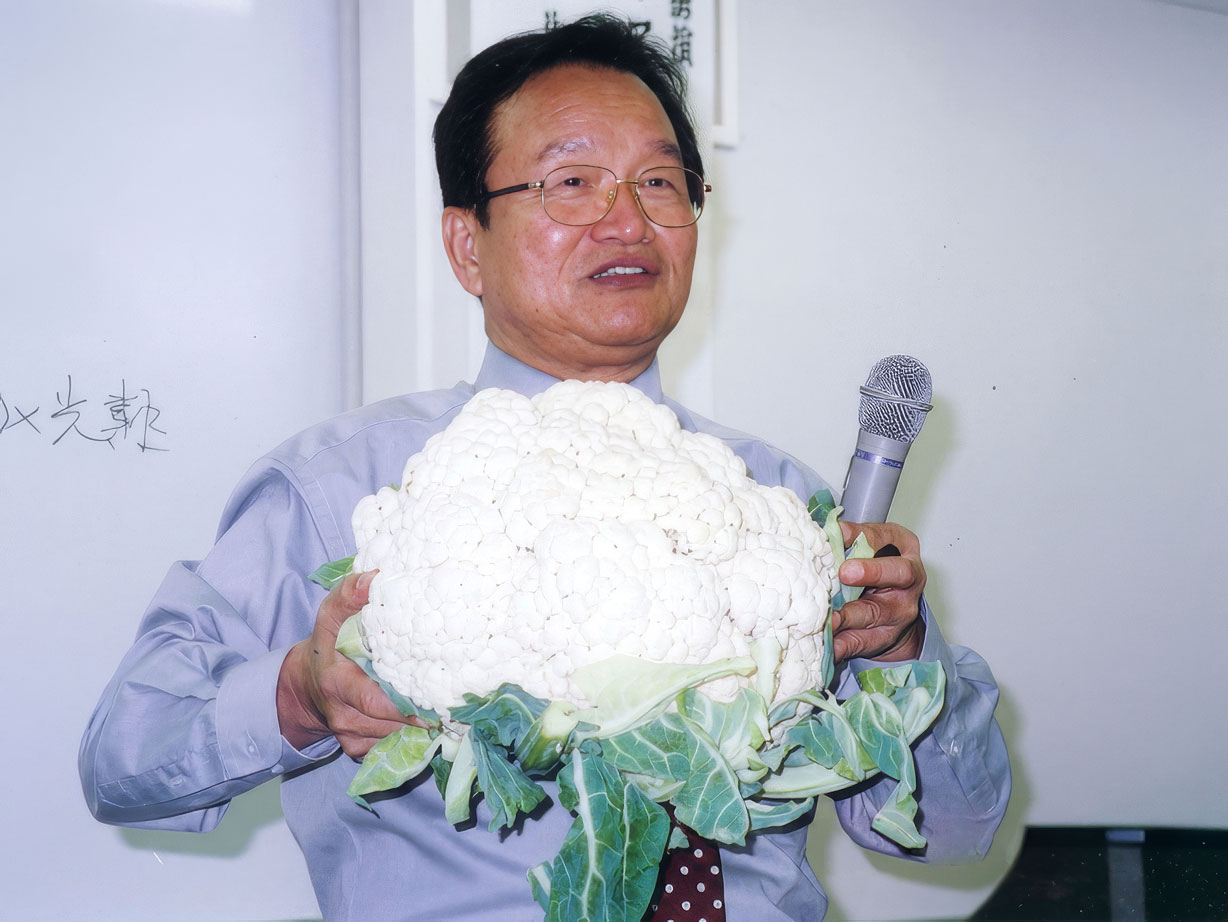
Korea, where it began as a way to keep farming.
The answer, in its compressed form, was that healthy soil is a living community. Microorganisms native to the place, fed and given the right conditions, do most of the work that synthetic inputs are sold to do. The system Cho developed and named Korean Natural Farming was not a list of recipes. It was a way of farming with what was already there, supplemented by simple inputs the farmer could make themselves.
This mattered because Korean farms in the late twentieth century were small, often poor, and increasingly dependent on imported fertilisers and pesticides they could not really afford. KNF was not invented to be virtuous. It was invented so that working farmers could keep working without losing the farm to input bills.
The core practices were IMO, or indigenous microorganism cultures, and a small family of farm-made inputs: fermented plant juice, fish amino acid, water-soluble calcium, lactic acid bacteria, and a few others. None of these were new inventions in isolation. Farmers across Asia had been fermenting things and feeding them to soil for a very long time. What Cho did was systematise them, put them in a sequence, and tie them to the growth stages of plants and animals so that each input had a job and a moment.
That sequencing is the part that gets lost when KNF travels. The recipes spread easily. The timing does not. A farmer in one climate making IMO in October is doing a different thing than a farmer in another climate making IMO in October, even if they follow the same instructions to the letter.
The principle is local. The application is even more local.A line repeated by KNF teachers in three countries
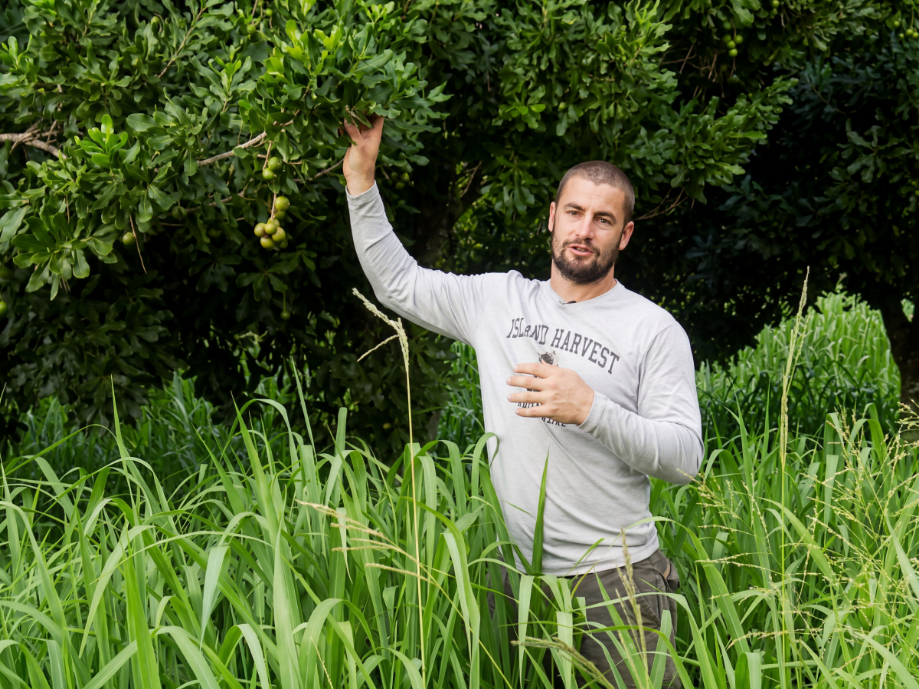
Hawaii, where it had to learn to scale.
Cho's teaching had been written for the scale he worked at: small farms, often under ten acres, run by a family or a couple of people. Macadamia in Hawaii is none of those things. The orchard Trump was managing was hundreds of acres of trees that needed treating in time windows of days, not weeks. The hand-made inputs that Cho's students could brew in clay pots had to become hundreds of litres in food-grade tanks, applied through fertigation lines, on a schedule that fit a commercial harvest.
The interesting part of this story is what Trump did not change. He did not industrialise the inputs in ways that would have broken the biology. The IMO is still wild-collected. The fermentations still take the time they take. He scaled the containers, the labour, and the application method, but kept the underlying logic intact. What he proved, mostly to a Western audience that had assumed KNF was a hobbyist practice, was that the method could run a commercial farm.
Trump began teaching after about a decade of practice. His courses were practical and unromantic: how to set up a barrel of FPJ, how to time IMO collection in your own climate, how to read a soil that had been chemically managed for a generation. He became, for many farmers in Europe and the Americas, the bridge between Cho's Korean text and the working farm in front of them.
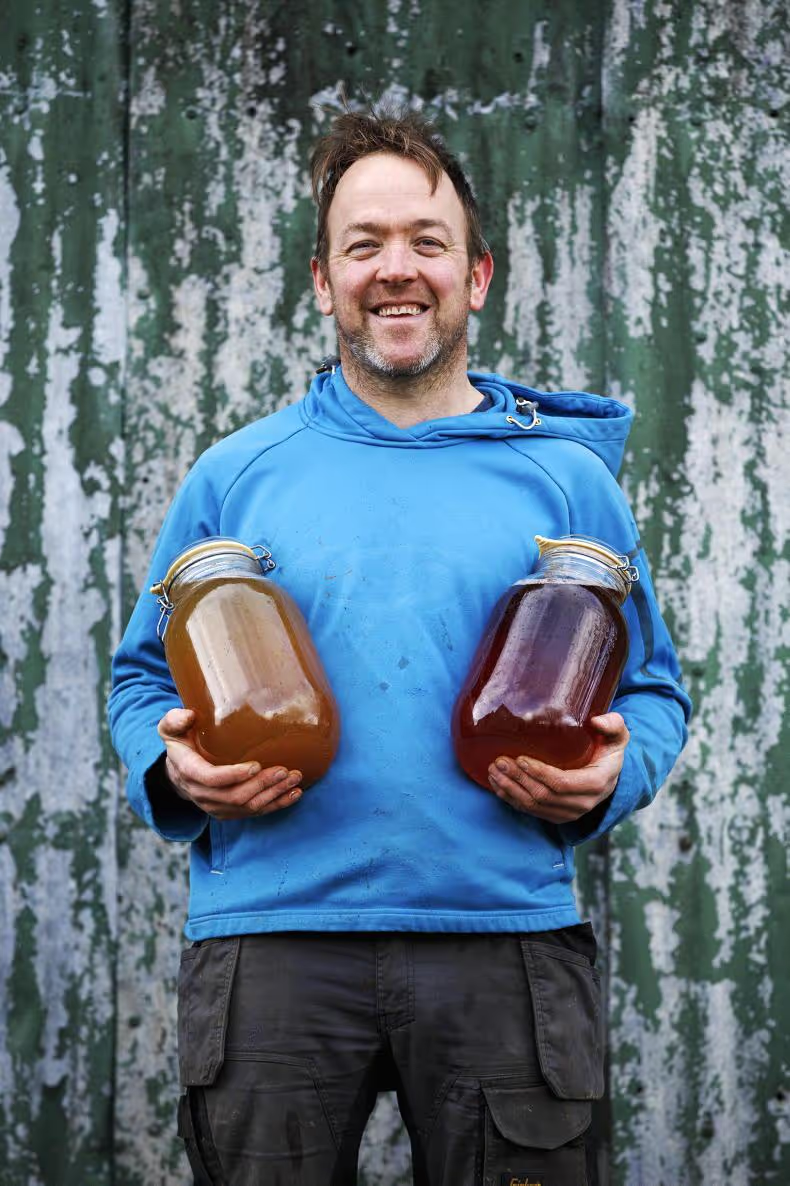
One of the people who travelled to study with him was a dairy farmer from Limerick.

Ireland, where the third translation is still being written.
The third translation, which is still being worked out, is about what KNF looks like in a system where the animal is on the grass for most of the year, the rain washes inputs through the soil profile in weeks rather than months, and the surrounding farms are running on a completely different logic. The microbes are different. The forest understory is different. Even the woodchip and the rice bran that show up routinely in Cho's recipes are not standard supplies in rural Ireland.
What Tom and the small group of farmers around him have spent the last few years doing is the same work Cho and Trump did before them: making the inputs by hand, applying them carefully, observing what changes, and writing down what works on this kind of ground. None of it is finished. The point of saying that publicly is that anyone who joins the work now is joining at the right time. The Irish version of KNF is not a settled body of knowledge waiting to be transmitted. It is a practice being built, on real farms, in real weather, on a timescale of decades.
What stays. What changes.
The method was developed in Korea, scaled in Hawaii, and is being adapted in Ireland by farmers who are still inside the work. Anyone who joins this generation of practice joins a tradition whose central rule is that the land in front of you is always the final teacher.